



You’re getting your visa sorted. The apartment search is underway. Maybe you’ve already picked out your neighborhood gelato spot.
But if you’re moving pets to Italy, there’s a whole separate checklist waiting for you. And here’s the thing: your pet’s paperwork runs on its own timeline, not yours. From microchips and rabies vaccinations to health certificates and airline requirements, there are a few important details you’ll want to get right before you book that flight.
This guide walks you through what your dog or cat needs to enter Italy, including important changes to the rules in 2026.
It’s brought to you in partnership with WorldCare Pet Transport, which has been relocating pets internationally for more than 25 years, has experience in over 80 countries, and holds a 4.9-star Google rating.

Start Early. Seriously.
Aim to start at least 1 to 2 months before your move. A few of the steps below come with built-in waiting periods, and those timelines don’t flex to fit your moving date. If your pet needs a rabies titer test, give yourself 4 months or more. Starting early means more breathing room and fewer last-minute surprises, for you and your pet.
The Essentials: Microchip, Rabies Vaccine, and Sometimes a Titer Test.
Microchip first. Your pet needs an ISO-compliant 15-digit microchip, and it has to be implanted before their most recent rabies vaccination. If the order is reversed, the vaccine doesn’t count for entry purposes. Have your vet scan the microchip at every appointment to confirm it’s readable and matches your paperwork.
Then rabies. Your pet’s rabies vaccine must be given at least 21 days before arrival in Italy and still be valid on the day they land. Boosters given on time keep that clock running. If the vaccination history has a gap, though, Italy treats the next shot as a brand-new primary vaccine, and the 21-day wait starts over.
Rabies titer test (only for some countries). If you’re moving from a country the European Union (EU) considers higher risk for rabies, your pet also needs a rabies titer test. Your vet draws blood at least 30 days after the rabies vaccine, the sample goes to an EU-approved lab, and your pet can enter Italy 3 months after the date of the blood draw. Pets coming from the US, UK, Canada, Australia, and most other major origin countries don’t need one.
The Paperwork: Your Pet’s Actual Passport
Unlike your own travel documents, your pet’s paperwork can’t be a scan or a photocopy. Original documents must travel with your pet. Here’s what you’ll need:
- EU Health Certificate, completed and signed by a government accredited vet within 10 days of arrival
- Rabies vaccination certificate, with full details on the vaccine, your vet, and your pet
- Microchip scan statement
- Fit to Fly certificate, usually done at the same vet visit as the health certificate
- Owner Declaration, confirming the move is non-commercial and your pet is traveling as a personal pet, not for sale
If you’re coming from the U.S., the health certificate needs USDA endorsement. Coming from the UK, it needs to be issued by an Official Veterinarian and follow the EU Animal Health Certificate format, since UK-issued EU pet passports are no longer accepted for entry into the EU. The certificate must show the microchip number, rabies details, and a vet exam within 10 days of arrival.
That Owner Declaration matters more than it might seem. Your pet’s move only counts as non-commercial if you travel within 5 days before or after your pet, whether you’re accompanying them yourself or authorizing someone else to. Miss that window and the move gets reclassified as commercial, which means different paperwork and a tighter timeline. For the full breakdown, see WorldCare’s guide to the EU 5-day rule.
Health Certificate Update: As of October 1, 2026, pets entering Italy from outside the EU must use the updated EU animal health certificate format under Regulation 2026/131. The transition window has closed, so certificates issued under the old format are no longer accepted. The core requirements you’ve already read above (microchip, rabies vaccine, timing) haven’t changed. It’s the certificate template and process that have changed.
One more thing to note: the name on your pet’s documents has to match your passport exactly. It’s a small detail, but it’s one of the more common reasons paperwork gets kicked back.
General Vaccines: Not Required, But Worth Doing
Italy doesn’t mandate general vaccinations for entry, but they’re smart to have anyway, and they are mandatory if your pet will spend any time at a boarding facility.
- Dogs: DHPP+L (Distemper, Hepatitis, Parvovirus, Parainfluenza & Leptospirosis), plus Bordetella (within the last 6 months)
- Cats: FVRCP (Feline Viral Rhinotracheitis, Calicivirus, Panleukopenia)
What Happens When You Land
Customs clearance in Italy typically takes 3 to 6 hours. During that window, you won’t get updates or photos of your pet due to the customs rules and procedures. Pets are given water during their time in customs.
Rome, Venice, and Milan are the most common ports of entry, but the approved list is broader and changes periodically. If you’re moving with WorldCare Pet, your Pet Relocation Counselor will confirm the current list for you.
No Quarantine Required
As long as your pet meets the microchip, rabies, and paperwork requirements above, Italy does not require quarantine on arrival. This often surprises pet parents moving from countries with stricter entry rules.
A Few Things to Keep in Mind
- No sedatives. Sedation can affect your pet’s breathing and body temperature in flight, and airlines won’t accept a pet that appears sedated. For anxious pets, ask your vet about non-sedating calming options, and start crate training early.
- Check that your Italian housing accepts pets before you finalize anything, don’t assume.
- Keep tick and flea prevention current for the whole time you’re in Italy.
- Travel carriers have size limits on vent openings: no larger than 1″x1″ for dogs, 3/4″x3/4″ for cats.
- Your carrier also needs to meet IATA Live Animals Regulations: enough room for your pet to stand, turn around, and lie down naturally, with a leak-proof bottom and secure ventilation on all four sides.
Milo’s Move to Italy
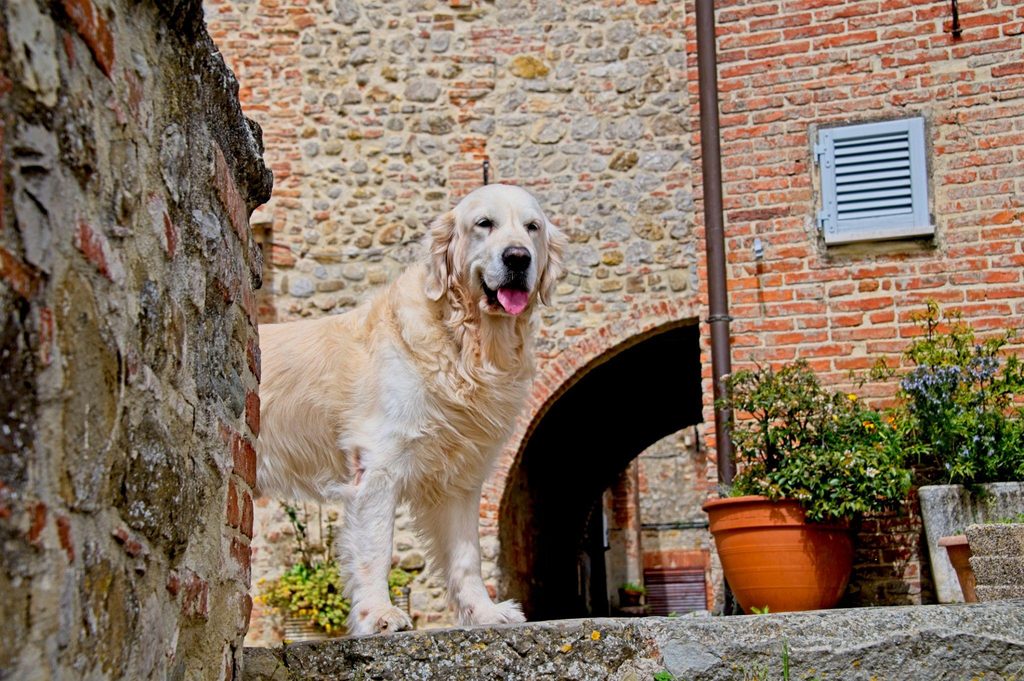
Milo, a Golden Retriever, moved from the USA to Italy with WorldCare Pet Transport, with a Pet Relocation Counselor coordinating every step. His pet parents started planning three months ahead, so his two-day journey, which included two flights with a layover to stretch, hydrate, and rest, went smoothly. Milo’s parents shared:
“Transporting our furry family member internationally was nerve wracking, but WorldCare truly made the process as seamless and worry free as possible! There were lots of nuances and details to be aware of in order to clear our dog through international customs, but WorldCare took care of so many of the details behind the process so that we could focus on the stress of packing and moving our family. Couldn’t recommend you guys enough!” – Won Family, USA to Italy
Frequently Asked Questions
Can snub-nosed breeds like pugs or French Bulldogs fly to Italy?
Often, yes, but with limits. Many airlines restrict snub-nosed (brachycephalic) breeds from cargo travel because of breathing risks, and rules vary by airline and route. If you have a snub-nosed breed, check airline options early, since they can narrow which routes are available.
Can I move more than one pet to Italy at the same time?
Yes, up to five pets can travel under the non-commercial rules described above. Moving more than five pets automatically reclassifies the move as commercial, which comes with different paperwork and a different timeline, something worth knowing early if you’re relocating with multiple animals.
Does my pet need tapeworm or tick treatment before entering Italy?
No. Unlike some other EU countries (Finland, Ireland, Norway, and a few others require tapeworm treatment), Italy does not mandate a pre-entry parasite treatment for pets. Ongoing tick and flea prevention is still a good idea for the length of your stay.
Are any dog breeds restricted from entering Italy?
No. Italy has no breed-based entry ban, so your dog won’t be turned away at the border because of breed. Instead, the responsibility falls on pet parents: in urban areas and public spaces (outside designated dog parks), dogs must be on a leash no longer than 1.5 meters, and you’ll need to carry a muzzle in case it’s needed.
Is there a minimum age for pets entering Italy?
Yes. Pets under 3 months old can’t enter Italy. Your pet must be at least 12 weeks old when they get their rabies vaccine, and the 21-day wait still applies after that, so most puppies and kittens will be closer to 4 months old by the time they’re ready to travel.
The Bottom Line
Moving to Italy is a big enough project without your pet’s paperwork becoming a source of stress. Start the microchip and vaccine timeline early, keep your documents in order, and lean on people who do this for a living.
While Smart Move Italy helps with the rest of your move, WorldCare Pet Transport handles door-to-door pet relocation to Italy, so you don’t have to figure out your pet’s journey alone. Ready to get started? Request a quote.

+ show Comments
- Hide Comments
add a comment